
Disclosure: This article contains affiliate links. If you purchase through them, Thrive Trilogy earns a commission at no extra cost to you. This never influences our analysis — all reviews are based solely on the science. Learn more about our affiliate relationships.
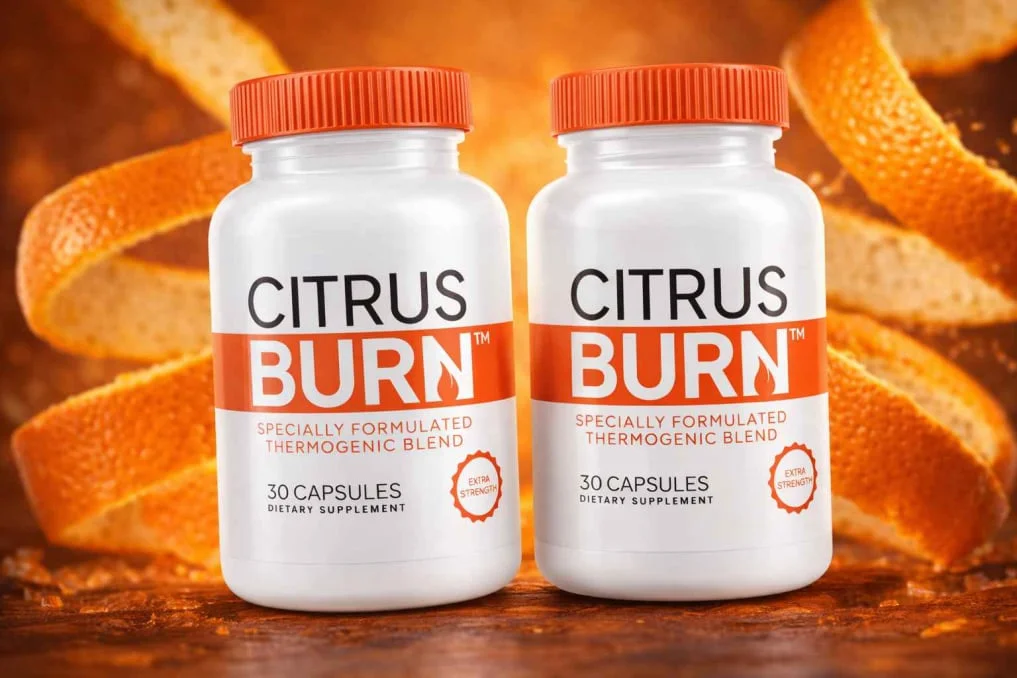
The One Question About Citrus Burn That Actually Matters
Most Citrus Burn reviews ask: “Does it work?” That’s the wrong question. The right question is: “Does the dose of p-Synephrine in this formula meet the threshold shown to produce a measurable physiological effect in peer-reviewed trials?” As an organic chemist, that’s the lens I apply. Not marketing. Not testimonials. Molecular mechanism and clinical evidence — nothing else. Here’s what the science actually says.
What Is p-Synephrine? The Biochemistry in Plain Terms
p-Synephrine is a naturally occurring alkaloid extracted from the peel of Citrus aurantium (Seville orange). Structurally, it is a phenethylamine — the same chemical backbone shared by ephedrine and adrenaline.
The critical distinction is receptor selectivity.
Ephedrine binds non-selectively to Beta-1, Beta-2, and Beta-3 adrenergic receptors. Beta-1 stimulation accelerates heart rate. Beta-2 affects smooth muscle. This broad binding profile is what caused ephedrine to be banned in dietary supplements in 2004.
p-Synephrine shows a significantly higher affinity for Beta-3 adrenergic receptors, which are concentrated in white and brown adipose tissue. Beta-3 activation triggers:
- Lipolysis — the mobilization of stored fatty acids from adipocytes
- Thermogenesis — increased metabolic heat production in brown adipose tissue
- Resting metabolic rate elevation — a modest but measurable increase in basal calorie expenditure
The cardiovascular risk profile is substantially lower than ephedrine — but this does not mean it is risk-free for all individuals (more on this below).
What the Clinical Research Actually Shows
This is where most supplement reviews fail. They cite mechanisms without checking whether real doses in real humans produce real effects.
Here is what peer-reviewed data tells us:
Study 1 — Stohs et al., 2011 (Phytotherapy Research)
A controlled trial examining p-Synephrine at doses of 50mg found statistically significant increases in resting metabolic rate (approximately 65 kcal/day increase) without meaningful changes in heart rate or blood pressure in healthy adults.
Study 2 — Gutiérrez-Hellín & Del Coso, 2016 (British Journal of Clinical Pharmacology)
3mg/kg body weight of p-Synephrine administered before exercise produced increased fat oxidation rates during moderate-intensity exercise compared to placebo.
Study 3 — Stohs et al., 2012 (Journal of the International Society of Sports Nutrition)
A combination of p-Synephrine with caffeine showed additive thermogenic effects, with no significant adverse cardiovascular events in healthy subjects.
The Dosage Reality Check:
The clinically studied doses range from 50mg to 100mg of p-Synephrine per serving. If Citrus Burn’s label does not disclose at least 50mg of p-Synephrine per serving, the evidence base above does not apply to their formula. Always check the supplement facts panel before purchasing.
The Capsaicinoid Synergy: Real or Marketing?
Citrus Burn pairs p-Synephrine with Andalusian Red Pepper Extract (capsaicinoids). This combination is biochemically coherent — not just marketing copy.
Capsaicinoids activate TRPV1 receptors, which independently stimulate thermogenesis through a separate pathway from adrenergic receptors. The two mechanisms are additive rather than redundant, meaning combining them at effective doses can produce a greater thermogenic response than either compound alone.
The caveat: capsaicinoid research typically uses doses of 2–6mg of capsaicin equivalents to produce measurable effects. Again — check the label for actual amounts.
Who Should Consider Citrus Burn
This formula may be relevant for you if:
- You are caffeine-sensitive and looking for a stimulant-free or low-stimulant metabolic support option
- You have confirmed that you are not taking medications that interact with adrenergic pathways (consult your physician)
- You are in a structured caloric deficit and want modest thermogenic support on top of diet and exercise
- You have verified the p-Synephrine dose meets the ≥50mg clinical threshold on the label
Who Should Not Use Citrus Burn
Do not use this product without consulting a physician if you:
- Have a history of cardiovascular disease, arrhythmia, or hypertension
- Are pregnant or breastfeeding
- Take MAO inhibitors, beta-blockers, or other cardiovascular medications
- Are under 18 years of age
- Have hyperthyroidism or adrenal disorders
p-Synephrine activates adrenergic pathways. Even with a cleaner receptor profile than ephedrine, this mechanism is not appropriate for everyone.
The Chemist’s Verdict
| Factor | Assessment |
|---|---|
| Mechanism | Scientifically sound — Beta-3 selectivity is well-characterized |
| Clinical Evidence | Moderate — positive signals at ≥50mg doses |
| Dosage Transparency | Verify on label before purchase |
| Cardiovascular Risk | Low in healthy adults — not zero |
| Capsaicinoid Synergy | Plausible and additive if dosed correctly |
| Overall Rating | Conditionally recommended |
Bottom line: Citrus Burn is built on a legitimate biochemical foundation. p-Synephrine is one of the few stimulant-free thermogenic compounds with actual clinical trial data behind it. Whether this specific formula delivers on that science depends entirely on whether the doses on their label match what the research requires.
If the label checks out — it is a reasonable option for the right person. If it doesn’t disclose doses — that is a red flag regardless of the marketing.
Should You Buy It?
→ Check Current Price & Label Transparency on the Official Citrus Burn Page (Affiliate Link)
We recommend verifying three things before purchasing any thermogenic supplement:
1- Is the p-Synephrine dose disclosed and at least 50mg per serving?
2- Are capsaicinoid amounts listed in mg, not hidden in a proprietary blend?
3- Does the manufacturer provide a Certificate of Analysis (CoA)?
If all three are yes — this formula earns a conditional recommendation from a chemistry standpoint.
Frequently Asked Questions
Is p-Synephrine the same as ephedrine?
No. While structurally related, p-Synephrine has preferential affinity for Beta-3 receptors rather than the Beta-1 and Beta-2 receptors that drive ephedrine’s cardiovascular effects. They are not pharmacologically equivalent.
Can I stack Citrus Burn with coffee?
Caffeine and p-Synephrine have demonstrated additive thermogenic effects in clinical literature. If you do combine them, start with a reduced dose of Citrus Burn to assess your individual response.
Why does the powder color vary between batches?
Natural Citrus aurantium extract varies in pigmentation based on harvest season, fruit maturity, and soil chemistry. Batch-to-batch color variation in a naturally-sourced extract is expected and is not a quality defect.
How long before I see results?
Thermogenic supplements support metabolic rate — they do not replace caloric deficit or exercise. Clinical studies measure acute metabolic effects within hours of dosing. Visible body composition changes depend on your overall dietary and training protocol.
This review reflects independent biochemical analysis. Thrive Trilogy is not affiliated with the manufacturer of Citrus Burn beyond the affiliate relationship disclosed above.
These statements have not been evaluated by the Food and Drug Administration. This product is not intended to diagnose, treat, cure, or prevent any disease.

M.Sc. in Organic Chemistry. I analyze health supplements and wellness trends through a scientific lens, breaking down ingredients and chemical profiles to separate marketing hype from biological reality.